Brain Matters · Advanced Therapeutics

Red and near-infrared light may help brain cells work better. Here is what Baycrest's light therapy research shows so far, including why skin tone changes the dose.
The short answer
Light therapy for the brain shines red or near-infrared light through the skull or the nose to give brain cells more energy and improve blood flow. Baycrest scientists are testing whether it can help memory and thinking in older adults and people living with dementia. It is still in research, and it is not yet a proven dementia treatment.
- Only a small share of the light reaches the brain, about 15% at most through the forehead.
- Skin tone changes how much light gets through, so doses may need to be set for each person.
- Few light devices sold to the public have been properly tested on the brain.
- Baycrest is testing a home light therapy device in a clinical trial.
Imagine a gentle light on your forehead that helps protect your brain from dementia. At Baycrest, scientists are working to find out if that can happen, and for whom.
Dr. Jean Chen, a senior scientist and Canada Research Chair in Neuroimaging of Aging, leads this research in Baycrest's Bresver Neuromodulation & Therapeutics Program. Her team brings together engineers, physicists and brain imaging experts. Light therapy is one part of Baycrest's wider work on neuromodulation research at Baycrest (opens in a new tab).
Dr. Chen shared this work at the Neuro Network Speaker Series, beside two colleagues who use magnets and gentle electric current. See how the three approaches compare in neuromodulation for dementia (opens in a new tab).
What is light therapy for the brain?
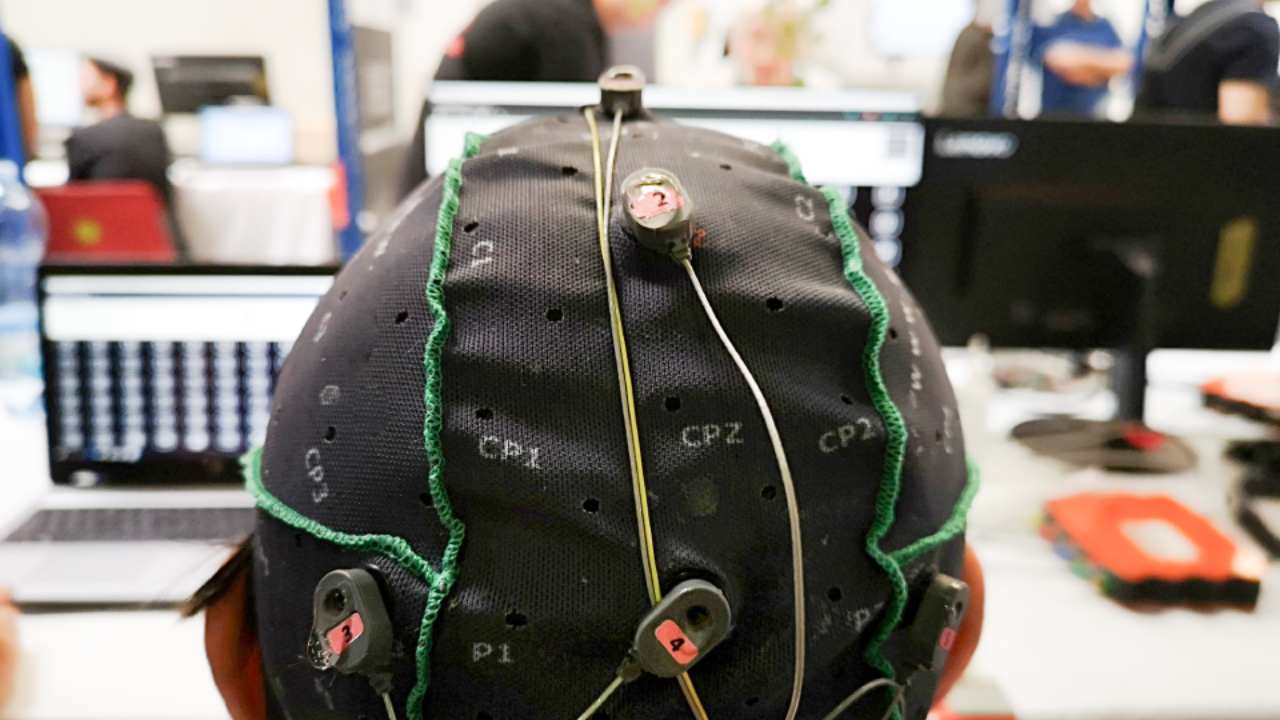
Light therapy for the brain, also called photobiomodulation (PBM), uses red or near-infrared light to stimulate brain cells. The light is shone on the skin of the forehead or into the nose. It needs no surgery and no implants.
Does red light therapy help dementia?
It may, but the research is still early. Baycrest's studies cover both red light and near-infrared light, which sits just past red on the spectrum.
Many red light devices are already sold online. Few have been properly tested for their effect on the brain. Baycrest's goal is different: to learn which light, which dose and which method work, and for which people, before anyone relies on a device at home.
How does light therapy work on brain cells?
The light is thought to energize brain cells and help clear waste. Researchers believe it works in three ways:
- It stimulates mitochondria, the parts of a cell that make energy, so cells can repair and maintain themselves.
- It improves blood flow, which helps carry away harmful waste.
- It may lower inflammation in the brain.
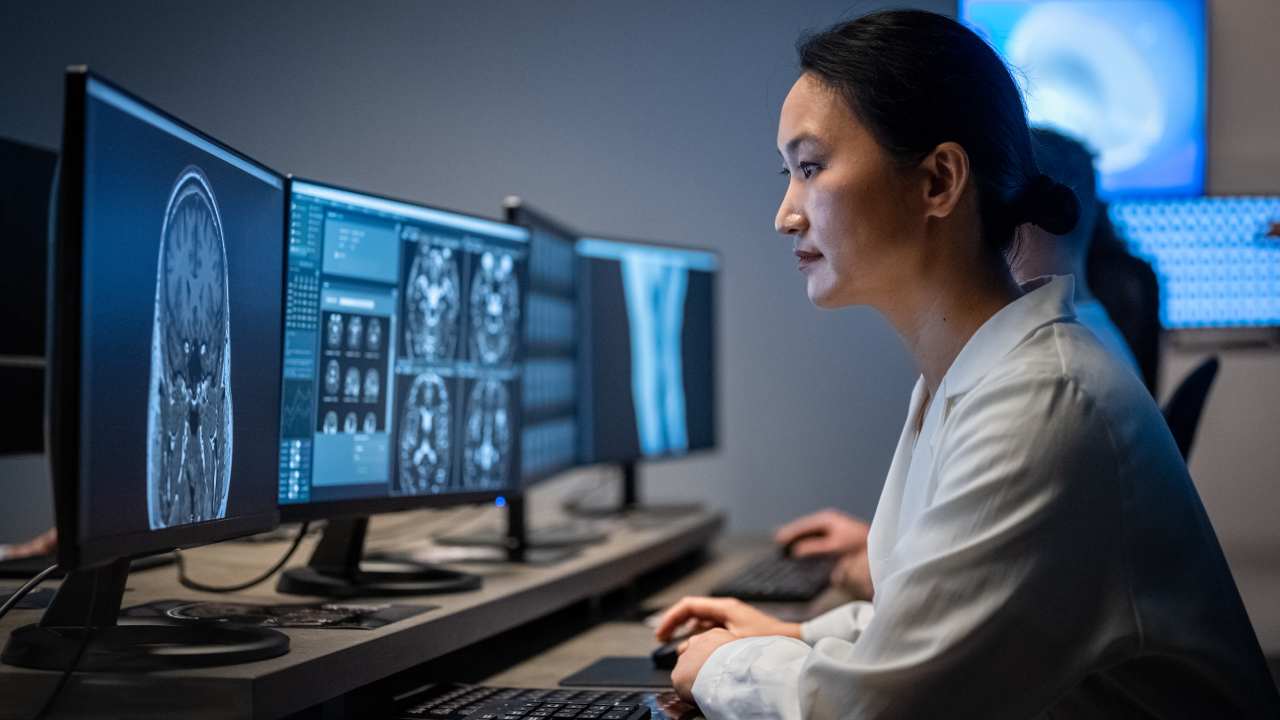
Using MRI scans, Dr. Chen's team has seen the effect spread through brain networks to deep areas like the thalamus, which helps with movement, attention and the senses. Some changes lasted after the light was turned off. Light also seems to affect the brain's fluid-clearing system, which removes toxins linked to Alzheimer's disease.
We're not just studying the brain; we're teaching it to heal itself.
Dr. Jean Chen, Senior Scientist, Baycrest
How much light reaches the brain?
Only a small share does, but it may be enough to matter. Dr. Chen's team used computer models to follow light through skin, skull and brain tissue [1]. They tested two methods, through the forehead and through the nose, at three colours of light: 670, 810 and 1064 nanometres, from red to near-infrared.
- Through the forehead, at most about 15% of the light reached the nearest part of the brain.
- Through the nose, about 1% reached the brain, in a region near the front.
- For the forehead, 810 nanometres worked best. For the nose, 1064 nanometres worked best.
- Brighter light raised the amount reaching the brain in a steady line.
A small share is not the whole story. Dr. Chen's lab found that light inside the nose moved brain fluid using much less energy. Learn how light reaches deeper brain areas (opens in a new tab).
Why does skin tone matter for light therapy?
Darker skin absorbs more light, so less of it reaches the brain. In the forehead models, the most light got through light skin and the least got through dark skin [1]. The gap was largest at 810 nanometres and smallest at 1064 nanometres.
That matters for fairness. A dose tested mostly on people with light skin could be too weak for people with darker skin. Dr. Chen's team says this is the first time skin tone has been built into dosing for brain light therapy. Their aim is treatment that works safely for everyone.
Can light therapy be used at home?
That is the goal, but not yet as a proven treatment. Light therapy devices are portable, so one day they could be as common as a blood pressure monitor. For now, home use happens in research studies, with the team watching closely. See how at-home brain stimulation studies work (opens in a new tab).
Baycrest also works with industry partners so that future devices meet Health Canada standards. The plan is to develop clinical guidance on how to give light therapy, then seek Health Canada approval for a device, if trials succeed.
Questions and answers about light therapy for dementia
Is light therapy for the brain safe?
The light therapy Baycrest studies is non-invasive and designed to be safe for use at home. Clinical studies are underway to test how well it works. Talk with your doctor before you try any light device.
Can light therapy reverse dementia?
There is no evidence that it can reverse dementia. Researchers are testing whether it can slow decline or help the brain work better in some people.
Should I buy a red light device for dementia?
Few devices sold to the public have been properly tested on the brain. Baycrest is still working toward Health Canada approval for a tested device. Ask your doctor before you buy one.
When will light therapy be available?
It depends on clinical trial results. Baycrest plans to seek Health Canada approval for a device and develop clinical guidance if the trials succeed.
How can I join a light therapy study?
Baycrest lists current studies on its Joining a Clinical Trial page (opens in a new tab) with details on how to take part.
Sources
Help bring safe light therapy closer
Your gift helps Baycrest test light therapy for people of every skin tone, so future treatments work for everyone.
Donate Read: Neuromodulation research at BaycrestRelated Articles: Brain Matters, Neuromodulation, Therapeutics, Research