Baycrest’s Dr. Morris Freedman co-developed VBM, which is showing a 60% reduction in behavioural dementia cases being admitted to acute care.
Watch video explaining VBM:

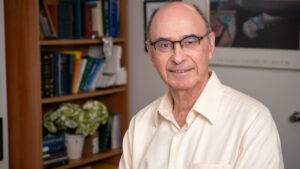
Dr. Morris Freedman
Dementia is often described in terms of memory, but Dr. Morris Freedman points to a different reality for many families: behaviours. Agitation, yelling, aggression, hitting, kicking, and spitting can become the breaking point that makes it extremely hard for a caregiver to keep a loved one at home.
Virtual Behavioural Medicine, often shortened to VBM, was created for that moment. Built at Baycrest, VBM is a fully virtual behavioural neurology service that assesses complex behavioural symptoms remotely and works directly with families and care teams to stabilize behaviours where the person already lives.
Learn more about the program at Baycrest’s Virtual Behavioural Medicine (VBM) program page.
Why VBM Exists: Behavioural Symptoms Drive Crisis
When behaviours escalate, the default pathway can become crisis-driven transfers to emergency departments, acute care, or specialized inpatient behavioural units. Those moves can be disruptive for the person living with dementia and exhausting for families. They also strain health-care resources.
VBM changes the direction of travel. Instead of moving the patient to the expertise, VBM brings the expertise to the patient. Dr. Freedman describes it as “essentially a virtual hospital,” designed to deliver specialist-level assessment and treatment planning without uprooting someone from a familiar setting.
What Happens in a Virtual Behavioural Medicine Assessment
In the interview, Dr. Freedman emphasizes that VBM does “all of the critical things we would do if we saw the person in person.” The assessment is not a surface-level check-in. It is structured clinical work delivered virtually, in real time, with the caregivers and care team present.
Core elements include:
- Clinical history and context to understand triggers, patterns, and recent changes
- Review of key behavioural features to clarify what is happening and why
- Medication review and optimization to reduce risk and improve symptom control
- Non-pharmacological behavioural interventions focused on practical, day-to-day strategies
- Caregiver coaching to support safer responses and reduce burnout
This combined approach matters because severe behaviours rarely have a single cause. VBM’s value is in the integrated view: medical contributors, environment, routines, communication, and caregiving capacity, all assessed together.
Baycrest describes VBM as supporting management of “responsive behaviours” such as physical or verbal aggression, agitation, hallucinations, paranoia, and other complex symptoms. You can read the caregiver-focused overview at
Virtual Behavioural Medicine program for families and caregivers.
A Key Outcome: 60% Avoidance of Admission in Early Cases
Dr. Freedman highlights an outcome that is easy to understand and hard to ignore: fewer transfers into acute care or emergency pathways.
After launching VBM, the team reviewed data from the first 95 cases, tracking whether admission to a specialized behavioural unit could be avoided. The result was clear: in 60% of cases, they were able to avoid an admission, and the findings were published in a peer-reviewed journal.
For readers who want the published research context, see the abstract indexed on PubMed:
Virtual behavioural medicine for dementia: outcomes and impact (PubMed).
For families, this outcome translates into something deeply personal: fewer disruptive moves, fewer crises, and more stability. For care teams and systems, it means specialized support that can prevent escalation before it becomes an emergency.
Why Baycrest Leads This Work
Baycrest is widely recognized for dementia care, research, and education. VBM extends that expertise beyond hospital walls, making specialist input accessible to people in their own communities. The program also reflects Baycrest’s broader commitment to research-informed care through the Rotman Research Institute at Baycrest and Baycrest hospital.
Where VBM Can Go Next
Dr. Freedman also points toward the future: more precise dementia care, potentially supported by AI, to help match the right interventions to the right person sooner. The need is real. Behavioural symptoms vary widely, and treatment response can be unpredictable. Better decision support could shorten the path from crisis to stability.
Virtual Behavioural Medicine in One Sentence
Virtual Behavioural Medicine is Baycrest’s virtual hospital for severe dementia-related behaviours, delivering in-depth specialist assessment and combined drug and non-drug strategies to support caregivers and care teams, while reducing avoidable transfers, including a 60% avoidance of admission in early cases.
Related Articles: Brain Matters, Research, Innovation, Care