Neuro Network Speaker Series · Brain Health
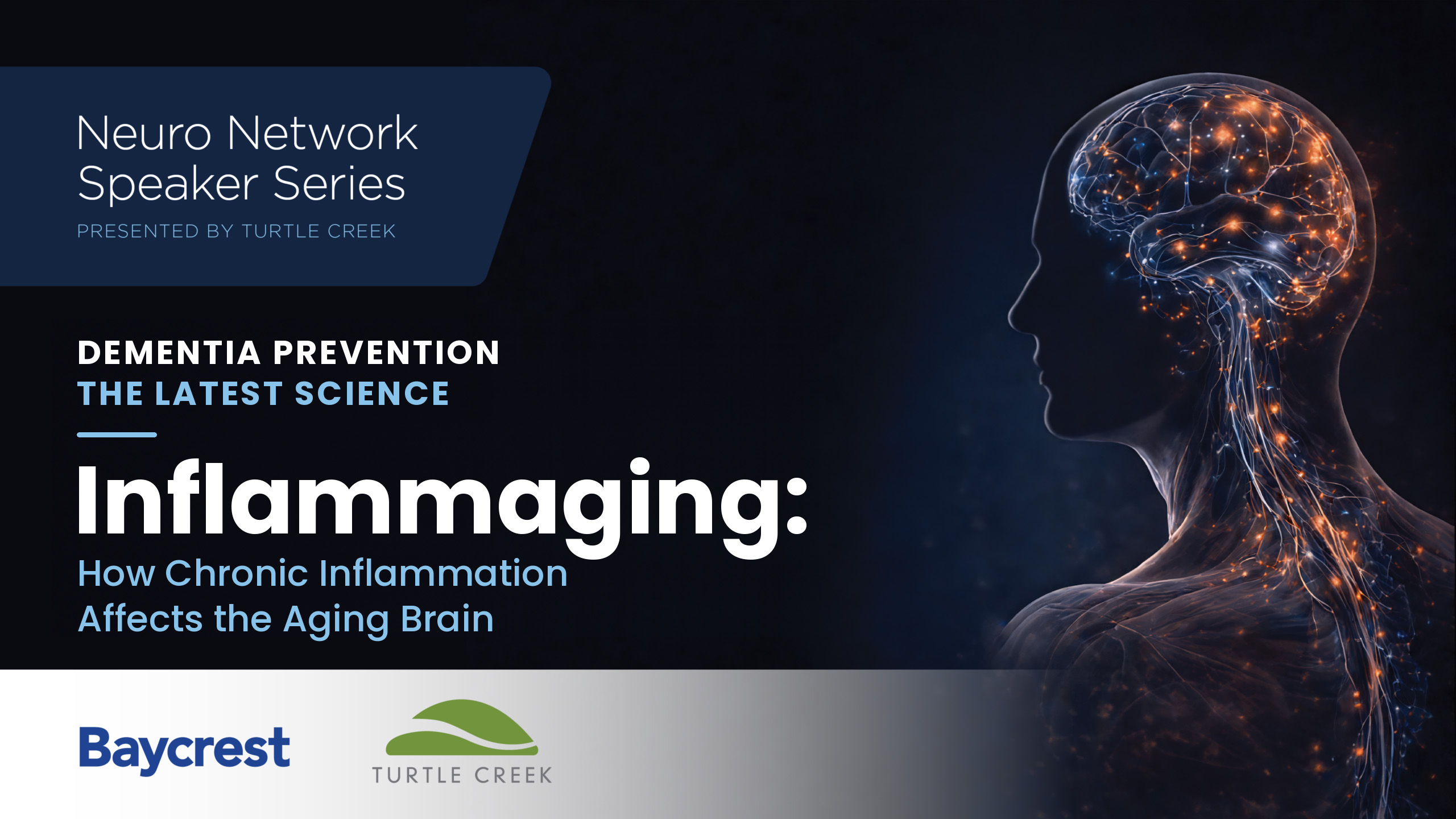
Inflammaging, Brain Health, and Reducing Dementia Risk
At a Baycrest Neuro Network Speaker Series talk, experts explained how chronic inflammation affects the aging brain. They also shared everyday habits that may help lower dementia risk.
The short answer
Inflammaging is chronic, low-grade inflammation that builds as the immune system ages. Baycrest researchers say it may contribute to cognitive decline and dementia. The good news is that everyday habits can help bring it down. They cannot guarantee prevention. However, they can help tip the odds in your favour.
- Exercise and weight loss are the strongest tools against inflammaging.
- Sleep, brain-healthy eating, social connection and managing health conditions also help.
- It is never too late to start.
Why inflammation matters for brain health
For decades, dementia research focused on a few main suspects. Amyloid, tau and blood flow problems topped the list. Today, scientists know the picture is more complicated. At a recent Neuro Network Speaker Series event, Baycrest experts explored one of the newer pieces of the puzzle: inflammation.
Dr. Howard Chertkow led the evening. He is a cognitive neurologist and Baycrest’s Chair in Cognitive Neurology and Innovation. He also directs the Kimel Family Centre for Brain Health and Wellness. In addition, he is scientific director of the Canadian Consortium on Neurodegeneration in Aging (CCNA), headquartered at Baycrest.
Afterwards, two more speakers explained how the Kimel Family Centre turns this science into everyday habits. Dr. Nicole Anderson is the centre’s associate scientific director. Dr. Danielle D’Amico is a postdoctoral fellow at Baycrest.
Overall, the message was hopeful. In 2024, the Lancet Commission on dementia estimated that nearly half of dementia cases worldwide could be prevented or delayed. That would mean addressing 14 modifiable risk factors across a lifetime. Still, prevention is not guaranteed. As Dr. Chertkow noted, more evidence is needed to know how close we can come to that figure.
What is inflammaging?
Inflammaging is chronic, low-grade inflammation that develops as the immune system ages. It happens without an injury or infection to set it off. In other words, the body’s defences stay switched on when they should be at rest.
Dr. Chertkow described four kinds of inflammation. First, acute inflammation is the red, swollen response to a scraped arm. Second, chronic inflammation can follow a long-lasting problem, such as sore gums. Third, autoimmune inflammation happens when the immune system attacks the body, as in rheumatoid arthritis. Inflammaging is the fourth type.
As immune cells age, some become senescent. That means they are old and no longer work properly. Instead of resting, they become activated. As a result, they release chemicals that affect tissues throughout the body, including the brain. One chemical researchers watch closely is interleukin-6 (IL-6). Dr. Chertkow compared the process to an old radiator that keeps sputtering on its own.
How does inflammation affect the aging brain?
Inflammation appears to affect the brain in two connected ways. The first is inflammation in the body, often called peripheral inflammation. Higher levels have been linked to heart disease, frailty, diabetes, kidney disease, cancer and depression. People living with dementia also tend to show more of it.
The second is inflammation inside the brain itself. The brain has its own immune cells, called microglia and astrocytes. When these cells become activated, they appear linked to the buildup of amyloid and tau. These are the proteins associated with Alzheimer’s disease.
Dr. Chertkow described body and brain inflammation as complementary but independent pathways to dementia. However, he stressed that not all inflammation is harmful. This research is new, and scientists are still learning how it works.
Researchers are also studying the microbiome, the bacteria that live in the mouth and gut. For example, a gum bacterium called P. gingivalis has been linked to Alzheimer’s disease. In research with colleagues at the University of British Columbia, Dr. Chertkow’s team found higher levels in people living with Alzheimer’s. Daily flossing helps clear the film where these bacteria grow.
What increases inflammation as we age?
Age and body weight appear to be the biggest drivers. Baycrest researchers examined blood markers of inflammation in a large CCNA group of Canadians. Most people with normal thinking and memory had low levels. By contrast, most people living with dementia had high levels.
Older age and a higher body mass index (BMI) stood out as the strongest factors. Smoking, alcohol, diet and sleep can also play a part. The team is now following people over time. This will help show whether inflammation helps cause dementia or simply travels with it.
How can you reduce inflammation and lower dementia risk?
Regular exercise is the most powerful step most people can take. Dr. Chertkow called exercise and weight loss the most important ways to bring inflammation down. The panel then added several other everyday habits.
Move every day, and build strength
According to Dr. Anderson, physical activity has the strongest evidence for lowering dementia risk. Aerobic activity counts, including brisk walking that gets your heart pumping. Strength training matters too. In early Kimel Family Centre data, more exercise is linked with less inflammation in the blood.
Eat in a brain-healthy way
Lower-inflammation eating patterns, such as the Mediterranean diet, feature vegetables, fruit, legumes, nuts, seeds, olive oil and fish. By contrast, Western-style diets high in ultra-processed foods and sugary drinks are linked to more inflammation. In the CCNA data, diet mattered less than weight and exercise. Even so, it is part of the picture.
Sleep at least seven hours a night
During sleep, the brain clears toxins and inflammatory chemicals called cytokines. As a result, good sleep may help reduce inflammation in the brain.
Stay connected and mentally engaged
Loneliness has a strong effect on dementia risk, Dr. Anderson explained. It has also been linked to high blood pressure and other conditions. Meanwhile, activities that challenge your thinking keep your brain engaged. Events like the speaker series offer both.
Manage health conditions and stay current with vaccinations
Treating diabetes, high blood pressure and hearing loss can lower dementia risk, Dr. Anderson said. Dr. Chertkow also pointed to evidence linking shingles vaccination with lower Alzheimer’s risk. A 2025 study in Wales is one example. It linked the live shingles vaccine to a 20% lower chance of a dementia diagnosis over seven years. Ask your doctor which vaccines are recommended for you.
How does the Kimel Family Centre help lower dementia risk?
The Kimel Family Centre for Brain Health and Wellness brings dementia risk reduction into everyday life. Baycrest describes it as the world’s first research-based community centre dedicated to reducing dementia risk.
Its approach builds on clinical trials that began in Finland. Those trials combined exercise, cognitive training, nutrition advice and health monitoring. Participants’ thinking skills improved more than those of a comparison group. In Canada, the Kimel Family Centre is the flagship of the CCNA’s CAN-THUMBS UP study, part of that international effort.
However, clinical trials are hard to recreate in a neighbourhood. So the Kimel Family Centre works more like a community centre. First, members receive a detailed dementia risk assessment and their results. Then they sign up for programs suited to their risks. These focus on physical activity, brain-healthy nutrition, cognitive engagement, mental well-being and social connection.
Early results are encouraging. Dr. D’Amico shared findings from the centre’s ongoing study, which have not yet been published. Over the first year, members became more physically active and ate in more brain-healthy ways. Loneliness, depressive symptoms, anxiety and stress all went down. Thinking skills improved, and members kept many of these gains from six to 18 months.
In addition, body fat and inflammation dropped among members who attended programs more often. The team also saw changes in blood pressure and cholesterol.
So what keeps members coming back? Dr. D’Amico’s interviews with members point to three reasons. First, they find a sense of community. Second, they enjoy the programs and instructors. Third, they can see real changes in their own health.
Is it too late to reduce your dementia risk?
No. Dr. Anderson said brain-healthy habits are ideal throughout life, but older adults can still benefit. She expects benefits at least as large among older members as younger ones. The team has not yet analyzed results by age, she noted.
Genetics matters too, but it is not destiny. Multi-domain lifestyle trials have found benefits as high or higher for people with a genetic risk for Alzheimer’s. Lifestyle changes cannot reverse dementia once it sets in. Even so, Dr. Anderson said they can help slow its progression.
What’s next for brain health research at Baycrest?
Dr. Anderson’s goal is to scale the Kimel Family Centre model across Canada and beyond. Meanwhile, Dr. Chertkow hopes to study what motivates each person to change their habits. The team also hopes to test whether low-cost medications, added to lifestyle programs, are safe and well tolerated. Donor support will help make these early steps possible.
Who spoke at the event?
Three Baycrest experts shared their research at this Neuro Network Speaker Series talk.


Frequently asked questions
What is inflammaging?
Inflammaging is chronic, low-grade inflammation that develops as the immune system ages. Some aging immune cells stop resting and stay activated. They release chemicals that affect tissues throughout the body, including the brain. It happens without an injury or infection to trigger it. Researchers link it to heart disease, diabetes, depression and dementia.
Can lifestyle changes prevent dementia?
Lifestyle changes can lower dementia risk, but they cannot guarantee prevention. The 2024 Lancet Commission estimated that nearly half of dementia cases worldwide could be prevented or delayed. That depends on addressing 14 modifiable risk factors. These include physical inactivity, obesity, high blood pressure, hearing loss and social isolation.
What is the best exercise for brain health?
A mix of aerobic activity and strength training is best. Brisk walking counts, as long as your heart gets pumping. According to Baycrest researchers, physical activity has the strongest evidence for lowering dementia risk. Exercise and weight loss are also the two most important ways to reduce inflammation in the body.
Can my doctor test my level of inflammation?
Inflammation markers can be measured by a lab if a doctor orders them. However, family doctors do not test them routinely. Results are also hard to interpret. A small infection, such as a tooth abscess, can raise them. In addition, researchers are still working out what levels are normal as we age.
Do brain health supplements prevent Alzheimer's disease?
Almost all brain health supplements have not been proven to prevent or slow Alzheimer's disease, according to Dr. Howard Chertkow. Many make vague claims, such as better brain function or more energy. In randomized trials, creatine did not help people with memory loss. Stimulants such as coffee can sharpen attention, but they do not prevent dementia.
Is it too late to lower my dementia risk?
It is never too late to start. Brain-healthy habits are ideal throughout life, but older adults can still benefit. Lifestyle changes cannot reverse dementia once it develops. Even so, Baycrest researchers say they can help slow its progression. They may also help people with a higher genetic risk for Alzheimer's disease.
Research referenced
- Livingston G, Huntley J, Liu KY, et al. Dementia prevention, intervention, and care: 2024 report of the Lancet standing Commission. The Lancet, 2024; 404(10452): 572-628. DOI: 10.1016/S0140-6736(24)01296-0. Read the Commission report (opens in a new tab).
- Eyting M, Xie M, Michalik F, Heß S, Chung S, Geldsetzer P. A natural experiment on the effect of herpes zoster vaccination on dementia. Nature, 2025; 641(8062): 438-446. DOI: 10.1038/s41586-025-08800-x. Read the study (opens in a new tab).
- Baycrest. The Kimel Family Centre for Brain Health and Wellness. Visit the Kimel Family Centre website (opens in a new tab).
Help turn brain health research into action
Donor support helps Baycrest study what lowers dementia risk and share it with the community.
Give todayRelated Articles: Brain Matters, Research