
Dementia is one of the most urgent health challenges of our time. In just a few years, more than a million Canadians will be living with the disease. “Soon we are going to have over a million Canadians with dementia,” said Dr. Howard Chertkow. The question is no longer whether dementia will touch our lives, but what we can do today to reduce the risk.

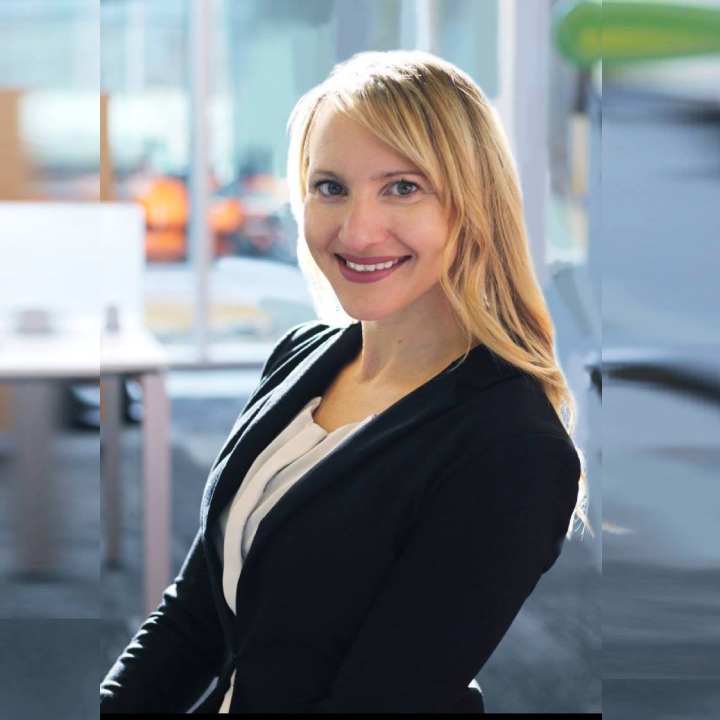
Dr. Nicole Anderson
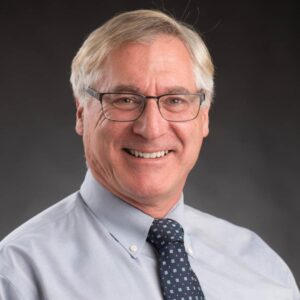
Dr. Howard Chertkow
At Baycrest’s Kimel Family Centre for Brain Health and Wellness, that question is being answered through the largest dementia prevention study in Canada and the first program of its kind in the world. It is a vibrant community centre with a scientific purpose: to follow hundreds of older adults over time, measure their progress and identify what truly works to reduce dementia risk.
As Dr. Nicole Anderson explains, “this is not simply an exercise class or a social club. It is a precision medicine trial in motion, woven into daily life.”
Prevention Only Works When It Is Personal
There is no shortage of advice about “boosting brain health.” Social media feeds are full of tips, tricks and miracle cures. The science tells a different story. There is no single formula that works for everyone.
“People’s brains are not the same. People’s risk factors are not the same,” says Dr. Chertkow. “One person may get the greatest benefit from physical activity. Another might need targeted changes to nutrition, sleep or medical risk factors. For others, loneliness and lack of social connection may be the most important issues to address.”
That is why the Kimel Family Centre is built on a precision medicine model. Participants begin with an in-depth assessment. The team collects information about health, lifestyle and dementia risk factors, and uses blood work and other biomarkers to understand each person’s unique risk profile. Follow-up assessments take place every six months.
Dr. Chertkow further explains, “we get biomarkers and blood tests to see how people are different and then test different forms of prevention,” the team explains. “We collect the evidence and give people a plan for what they can do to prevent dementia in their case.”
A Program Driven by Data and Guided by Experience
Participants describe the experience as both supportive and surprisingly motivating. One member recalls her six-month reassessment:
“I went into the second assessment, and that was really a wow moment. I could see the direct correlation between where I was putting my efforts and where I was achieving success. It made me think, I know the areas I have to improve on. I want to get busy. Success is the biggest motivator” (Shayndy – Participant)
This is the power of data-driven prevention. Measurement leads to insight. Insight leads to action. Action leads to measurable change.
Another participant noticed a change in her balance after several months of circuit training at the Centre. She had been taking part in specific exercises that challenged her stability. One day she realized that everyday activities felt easier and more secure.
“All of a sudden I realized my balance was much better than it was a year ago. It has consistently been better, and I link that to the circuit training. It is a really nice thing to notice.” (Ian – Participant)
Improvements like better balance, greater strength and sharper thinking are meaningful in daily life. They also show up in the data that researchers are tracking over time.
Risk Factors Are Measurable and Changeable
Global research suggests that up to 45 percent of dementia cases worldwide could be prevented by addressing modifiable risk factors. The Kimel Family Centre is putting that knowledge into practice and documenting the results.
When participants first join, the team often sees a familiar pattern:
- About 80 percent are not getting enough physical activity.
- Almost everyone could benefit from a more brain-healthy diet.
- Roughly two thirds are not getting enough meaningful social interaction.
Each of these risks is measurable. More importantly, each one is changeable. Through structured programs, small group classes, education sessions and social activities, participants are supported to make and maintain healthy changes.
“We are now starting to get the six month and 12 month readouts to compare,” the team reports. “People are being more social. They are becoming fitter. There are scales for all of these things, and we are getting the numbers that back up what people tell us. They are less lonely and happy to be more social.”
Depression, loneliness and a lack of meaning in life are all recognized risk factors for dementia. By helping people move more, eat better and connect with others, the Kimel Family Centre is working on many of these risks at once.
The Human Side of Scientific Research
Although the Centre is powered by science, participants often talk first about the atmosphere. Many describe it as welcoming, creative and kind.
“After a long life of moving and listening to music and creating art, I have realized how important this is to your sociability and your brain health,” says Margie Nightingale, Program Sponsor. “What is really beautiful about this Centre is how friendly it is and how much kindness is involved in the research. We look at the whole person and you are involved in a whole community.”
Another participant reflects on what it means to take part in a research program that could change the future for others.
“I hope I can be one of many contributing to the research on brain health and dementia risk, not only for myself but for my children and grandchildren.” (Shayndy – Program Participant)
For many members, the knowledge that they are helping scientists learn how to prevent dementia is as meaningful as the personal benefits they experience.
Scaling a Model for Canada
The Kimel Family Centre is already the largest dementia prevention study in Canada, and the first research-driven community program of its kind in the world. Yet the ambition does not stop at Baycrest.
“What is so exciting about the Kimel Centre programming is how scalable it is,” says Dr. Nicole Anderson. “These programs can be applied in many other community settings. This will change the whole landscape in terms of dementia prevention in the future.”
The goal is simple and bold: create a model that can be adapted and shared with communities across the country so that more Canadians can benefit from evidence-based dementia prevention.
Champions for Change: Margie Nightingale and Mark Diamond
Behind every breakthrough program there are champions who believe in the vision and work to make it possible. At the Kimel Family Centre, Margie Nightingale and Mark Diamond play that role as co-chairs of a committee, “The Neuro Network“, raising funds to advance the Centre’s work.
They understand that delivering precision medicine for dementia prevention requires more than good ideas. It takes sustained investment in research, facilities, expert staff and technology. Their leadership helps ensure that the Kimel Family Centre can continue to grow, collect high-quality data and share what it learns with the world.
As advocates for Baycrest and the Kimel Family Centre, Margie and Mark are helping to move dementia prevention from hopeful theory to practical reality.
A Pathway Forward in Dementia Prevention
Compared with conditions like heart disease and cancer, the quest to treat and prevent dementia is still in its early stages. The science is advancing quickly, and Baycrest is forging a pathway that others can follow.
The Kimel Family Centre shows what is possible when rigorous research is combined with real-world programs and a strong sense of community. Participants receive personalized plans. Researchers gather high-quality data. Donors and advocates help scale what works.
This is how we move beyond advice and into action. This is how we build a future where more people can age with their memory, independence and sense of self protected for as long as possible.
For Baycrest and the Kimel Family Centre, dementia prevention is not a slogan. It is a scientific mission, backed by real people and real results.
For more information, visit the Kimel Family Centre.
Related Articles: Brain Matters, Research