
We all forget things. An appointment, a name, a reason we walked into a room. Most of the time, these lapses are harmless. But when forgetfulness becomes frequent or begins to disrupt daily life, it raises a more pressing question: “Is this normal forgetfulness, or is it a sign of memory loss?”
The Science of Memory: How the Brain Changes Over Time
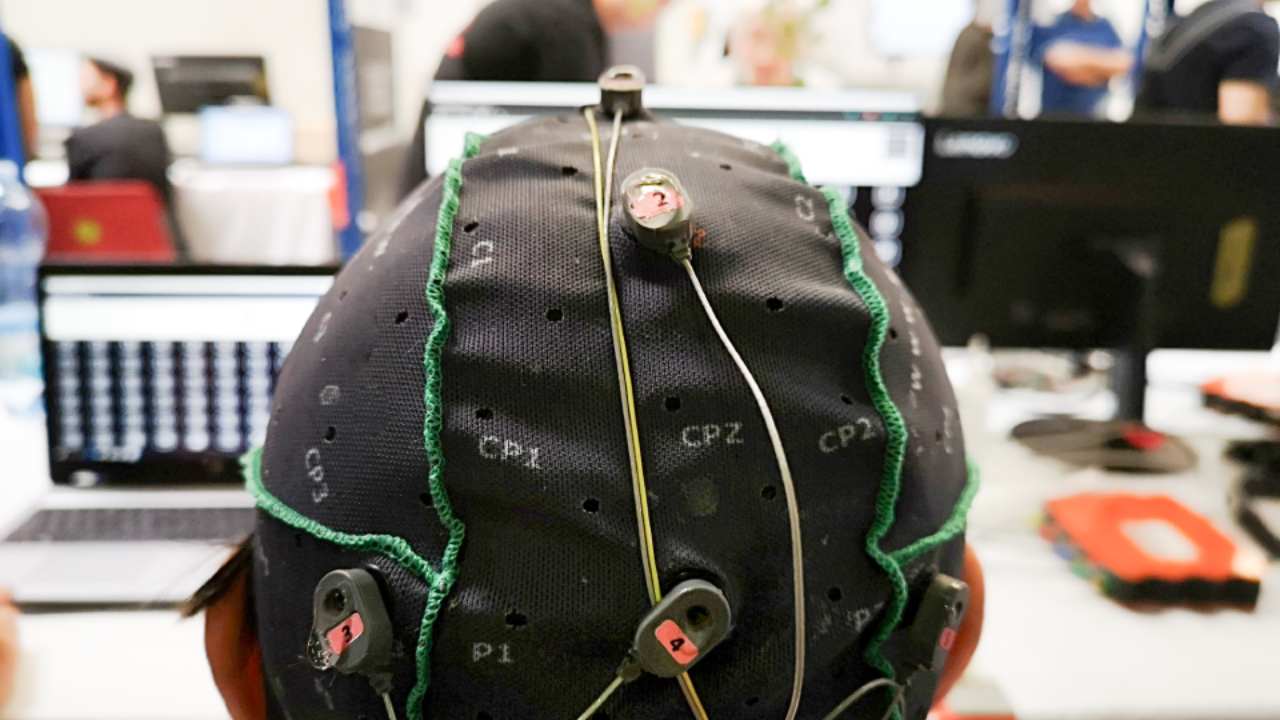
Memory is not something we simply “lose” as we grow older. It is a dynamic process shaped by the way the brain forms, stores, and protects information throughout our lives. At Baycrest, scientists study these processes at a broad, network level using advanced tools such as high-resolution structural MRI to understand how memory functions long before symptoms emerge.
Research from Baycrest experts has shown that small changes in grey matter volume, particularly in important regions of the temporal lobe, can signal early cognitive decline even before a person notices memory difficulty. These MRI markers often appear years before measurable impairment, offering valuable insight into aging, brain health, and the earliest stages of cognitive change.
“We are working on advanced methods to improve the “pictures” we take of the structure and function of the temporal lobes. Similar to the upgrades that you see with a new phone camera, we are working on more precise, reliable ways to measure the grey matter volume in areas affected by Alzheimer’s disease,” says Baycrest Academy for Research and Education Senior Scientist, Dr. Rosanna Olsen.
By examining how memory is created and how the brain’s structure evolves over time, Baycrest researchers are identifying new opportunities to detect risk earlier and protect cognitive function for longer.
How Memory Works and Changes With Age
Memory relies on several systems that interact to store and retrieve information.
- Short-term memory (working memory) holds data for a few seconds or minutes.
- Long-term memory retains facts and experiences that have been reinforced through repetition or emotional association.
- Explicit memory manages conscious recall, such as names or events.
- Implicit memory supports learned skills and habits performed automatically.
These systems do not age at the same pace. Normal aging tends to slow retrieval and reduce learning speed, but it rarely erases stored knowledge. Vocabulary, practical skills, and emotional memories usually remain stable even as recall becomes less immediate.
Distinguishing these natural changes from early cognitive decline helps clarify when forgetfulness reflects age, and when it may signal something more significant.
What Is the Main Cause of Forgetting?
Forgetting typically arises from how information is encoded and managed, rather than from permanent loss. The brain processes thousands of inputs each day and gives priority to those linked with focus, repetition, or emotional relevance. Details that never receive that level of attention often fade before they can be stored securely.
Most everyday lapses follow recognizable patterns, like absentmindedness, transience, or the familiar “tip-of-the-tongue” moment. These occur when attention is divided, stress levels are high, or sleep is insufficient. In such situations, the memory is formed only partially, so retrieval fails even though traces of it remain.
Another frequent mechanism is interference, when new information overlaps with or replaces older content. This can happen while learning similar material, such as a new route or password that obscures the previous one. The effect is amplified when stress hormones rise or sleep quality declines, since both conditions reduce hippocampal efficiency and weaken the consolidation of new memories.
Overall, most forgetting arises from encoding gaps, overload, or temporary retrieval failure, not structural decay.
What Is the Science Behind Forgetting?
Forgetting results from active cellular and molecular processes that adjust the strength of neural connections over time. Memory depends on synapses, the junctions through which neurons communicate. When these connections weaken or are dismantled, access to stored information declines.
1. Molecular Activity Alters Synaptic Strength
Inside neurons, small regulatory proteins modify the actin cytoskeleton—the framework that supports each synapse.
- When these proteins activate, the connection loosens.
- The electrical signal that sustained the memory weakens.
- With time, the trace fades unless it is reactivated through recall or repetition.
This molecular activity explains why memories can weaken even without new learning.
2. Tissue Integrity Changes Reduce Signal Efficiency
Forgetting also involves changes in how brain tissue functions.
- Brain imaging studies at Baycrest show that the “integrity” of neural tissue can decline over time.
- These changes reflect the loss of synapses, demyelination (breakdown of protective nerve coatings), and other cellular alterations.
- As tissue integrity weakens, communication between brain regions becomes less efficient.
- The probability of reactivating specific memory patterns decreases.
This fine-tunes how easily older information can compete with new input.
3. New Neurons Reshape Existing Circuits
In the hippocampus, new neurons form throughout life, though after a person reaches adulthood, the rate of new neuron development slows exponentially.
- These neurons integrate into existing networks.
- Their arrival slightly rearranges older pathways.
- As networks adjust, some older connections lose priority, making certain memories less accessible.
This structural remodeling keeps the memory system dynamic but contributes to gradual forgetting.
4. Synaptic Pruning Refines the Network
Across the brain, underused or redundant synapses are systematically removed through synaptic pruning.
- Pruning sharpens signal precision.
- It prevents energy waste in inactive pathways.
- It preserves flexibility for new learning.
Together, these processes show that forgetting is an organized biological function. It allows neural systems to remain responsive to current input rather than being saturated with outdated information.
Forgetting vs. Memory Decline
Occasional memory slips are expected and usually harmless. The concern begins when lapses become frequent, progressive, or interfere with daily routines.
The difference lies in the pattern of forgetting.
| Type | Description | Example |
| Normal forgetting | Information fades, or retrieval slows | Can’t recall where you left your keys, then remember later |
| Overload forgetting | Too much information at once | Mixing up appointments or passwords during a busy week |
| Stress-related forgetting | Temporary memory block under anxiety | Forgetting words during a presentation |
| Sleep-related forgetting | Poor consolidation from lack of rest | Forgetting details of a conversation after an all-nighter |
| Pathological forgetting | Progressive, consistent loss | Forgetting familiar faces or how to perform daily routines |
Can We Prevent Forgetting?
We can’t stop the brain from cleaning up, but we can reinforce what matters. Cognitive research consistently shows that regular recall, repetition, and attention to rest all help preserve information as the brain ages.
- Practice retrieval. Recall information instead of rereading it. Each recall strengthens the engram.
- Space repetition. Review at increasing intervals to slow the rate of forgetting.
- Sleep deeply. Memory consolidates during non-REM sleep; chronic sleep loss weakens recall.
- Focus fully. Multitasking scatters attention and weakens encoding.
- Move regularly. Aerobic activity enhances blood flow and stimulates neurotrophic factors that promote neuronal growth.
- Eat and hydrate wisely. Omega-3s, antioxidants, and consistent hydration preserve cellular function.
- Learn continuously. Novel experiences build redundancy in neural circuits, protecting against decline.
These habits strengthen memory systems, but recognizing when changes go beyond normal forgetting is just as important.
When to be Worried About Forgetfulness?
Concern arises when changes in memory begin to affect daily functioning or become noticeable to others. Subtle patterns, missing familiar turns, losing track of recent events, or repeating the same story often emerge months before a formal diagnosis is made. These shifts deserve medical attention, especially when they persist or increase in frequency.
Warning signs that memory changes may require evaluation include:
- Repeated confusion about time, place, or familiar routes.
- Difficulty following conversations or managing routine tasks.
- Gaps in language or frequent use of vague substitutions (“that thing”).
- Noticeable changes in mood, judgment, or personality.
If several of these features appear together, clinicians use tools such as the Montreal Cognitive Assessment test (MoCA) or the Self-Administered Gerocognitive Examination (SAGE) to measure attention, recall, and reasoning. Some causes, like vitamin deficiency, thyroid disorder, depression, medication side effects, can be reversed once treated.
Others, such as mild cognitive impairment or early dementia, benefit from structured follow-up. Evidence shows that early assessment, combined with mental exercise, physical activity, and consistent social contact, helps slow the decline and maintain independence for longer.
Early assessment helps most people manage changes and preserve independence through targeted medical care and lifestyle adjustments. The goal is not only to slow decline but to preserve confidence and autonomy in daily life. Recognizing what is normal and what is not turns uncertainty into action.
The Bottom Line
Forgetting is part of a healthy brain’s rhythm. It filters what’s irrelevant, reinforces what’s useful, and clears space for growth. The concern arises only when lapses become persistent, disorienting, or interfere with life.
If you notice that pattern, seek an evaluation. If not, give yourself credit. Your brain is doing precisely what evolution designed it to do: edit, refine, and adapt.
Frequently Asked Questions
How does the brain remember that you forgot something?
This happens through metacognition, the brain’s ability to monitor itself. When you sense a blank space where a memory should be, that awareness means the trace still exists, but retrieval failed. It’s your mind flagging a missing piece.
Can too much information make you forget?
Yes. The brain’s limited working memory can overload. When you take in too much information at once, new memories interfere with older ones, a phenomenon known as retroactive interference.
Does frequent forgetting mean dementia?
Not by itself. Dementia involves progressive loss that affects reasoning, language, and daily functioning. Normal forgetfulness is situational and often reversible with rest, improved focus, or a better mood.
Why do we forget what we just read or heard?
Because the memory never moved from short-term to long-term storage. If attention lapses before encoding finishes, the trace decays within seconds.
Is it possible to train the brain to forget less?
You can’t halt forgetting entirely, but you can slow it. Regular recall, good sleep, mental challenges, and social connections strengthen retrieval networks. Baycrest research shows that these lifestyle habits build cognitive reserve, the brain’s ability to compensate for age-related change.
Related Articles: Brain Matters