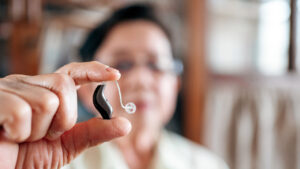
 Baycrest recently hosted a virtual workshop focused on hearing loss and dementia risk and what older adults can do to protect their brain health. The session featured audiologist Dr. Sylvia Janowski and drew on new findings from the 2024 Lancet Commission report on dementia risk, along with practical tools and resources available through Baycrest.
Why Dementia Risk Matters
The workshop explained how hearing loss and dementia risk are connected through a wide range of biological and lifestyle factors. Dementia is a loss of cognitive functioning that affects memory, reasoning, and thinking in ways that interfere with daily life. It is not a normal part of aging and remains one of the leading causes of disability among older adults.
Participants were introduced to the idea that around 45 percent of dementia risk is modifiable and shaped by lifestyle, health, and environmental exposures. This sets the stage for understanding why hearing health matters for long term brain protection.
What the 2024 Lancet Commission Says about Dementia Risk
The 2024 Lancet Commission report identifies fourteen modifiable contributors to dementia. These include education, hearing loss, LDL cholesterol, depression, traumatic brain injury, physical inactivity, diabetes, smoking, hypertension, obesity, excessive alcohol use, social isolation, air pollution, and visual loss.
Hearing loss stands out in the report because it accounts for seven percent of global dementia cases, which positions hearing loss and dementia risk as closely linked. Addressing several risk factors together, such as social engagement and physical activity, may provide even stronger protection.
How Hearing Loss Influences Dementia Risk
Dr. Janowski outlined research showing that untreated hearing loss increases dementia risk as it becomes more severe. Mild hearing loss can double the likelihood of developing dementia, moderate loss can triple it, and severe untreated loss can increase the risk up to fivefold.
Several mechanisms help explain the connection between hearing loss and dementia risk:
- Psychosocial factors: Loneliness, isolation, and chronic stress become more common when hearing loss goes untreated.
- Reduced cognitive reserve: When the brain works harder to interpret unclear speech, fewer resources remain for memory and reasoning.
- Shared vascular factors: Reduced blood flow may affect both the brain and the hearing system.
Can Treating Hearing Loss Reduce Dementia Risk?
Research presented during the workshop suggests that hearing treatment may play a meaningful role in reducing cognitive decline, especially in older adults with elevated dementia risk. In one large study, hearing aid users with mild cognitive impairment developed dementia later than nonusers, delaying onset from around two years to roughly four years.
The ACHIEVE trial also provided important insights. While the overall results showed modest cognitive changes across all participants, a subgroup of high risk older adults experienced a forty eight percent reduction in cognitive decline over three years when using hearing aids compared with those who did not use them.
These findings reinforce the broader message that addressing hearing loss supports communication, social engagement, emotional well being, and healthier cognitive aging.
Recognizing the Signs of Hearing Loss
The workshop emphasized that many adults are unaware of their gradual hearing changes. Recognizing these signs early helps reduce hearing loss and dementia risk over time. Common symptoms include:
- Hearing speech but finding words unclear
- Feeling that others mumble or speak too fast
- Frequent requests for repetition
- Difficulty hearing in background noise
- Improved comprehension when seeing the speaker’s face
- Ringing or buzzing in the ears (tinnitus)
Statistics Canada data indicate that more than half of adults ages 50 to 59 have hearing loss. Awareness drops even further among older adults, making regular screening especially important for reducing hearing loss and dementia risk over time.
Baycrest’s Free Hearing Screening and Brain Health Tools
To support early detection, Baycrest offers a free online hearing screening tool created in partnership with Shoebox. It provides a quick estimate of hearing status and an opportunity to follow up with a clinician if needed.
The workshop also introduced several complementary resources:
- Cognitive Brain Health Assessment: A validated tool for identifying subtle cognitive changes.
- Smart Tracker: A lifestyle tool that monitors physical, social, emotional, and cognitive factors.
- Defy Dementia podcast: A series exploring dementia risk reduction strategies and lived experience.
- Learning the Ropes Foundations webinar: A free introduction for adults with mild cognitive impairment.
- Caregiver resources and C-CART: Evidence based support tools for caregivers across Canada.
Key Takeaways: It Is Never Too Early to Check Your Hearing
The central message of the session was clear. Early action on hearing loss can help lower dementia risk and support healthier aging. Treating hearing loss improves communication, strengthens social connections, and reduces the cognitive strain that contributes to cognitive decline.
Baycrest offers accessible online tools, education, and screening resources designed to make it easier for adults to protect their hearing and support long term brain health. Anyone interested in reducing hearing loss and dementia risk can begin by completing the free hearing screening and exploring the full range of Baycrest programs.
Related Articles: Brain Matters, Research, Education