
The idea of using gentle electrical currents to influence the brain isn’t new — it’s been around for nearly 200 years. Early scientists discovered that small amounts of direct current could change the way people felt and thought. Over time, this simple concept evolved into a powerful scientific tool known as Transcranial Direct Current Stimulation (tDCS).
In recent decades, tDCS has gained attention for its surprising versatility. Military programs have studied it as a way to help soldiers stay alert and improve decision-making during high-pressure missions. Elite athletes have used it to sharpen focus, enhance coordination, and recover faster from mental fatigue. Even pilots and surgeons have trained with tDCS to boost reaction time and precision.
Now, researchers at Baycrest are harnessing that same science to support brain health as we age. Dr. Howard Chertkow and Dr. Tyler Roncero are leading studies exploring how tDCS can strengthen memory, speech, walking, and concentration in people living with dementia, showing that what once helped professionals perform at their peak may soon help us maintain independence and clarity of mind as we age.
How It Works
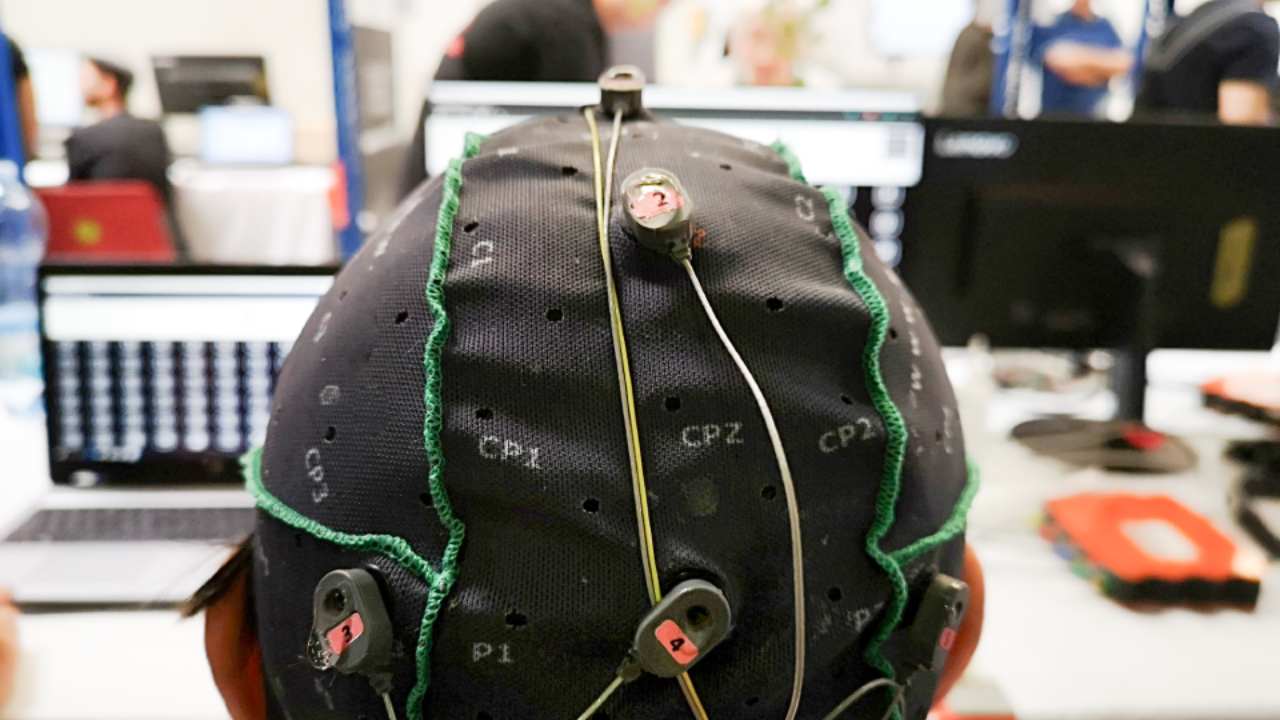
tDCS is a gentle, non-invasive treatment that uses a very low electrical current on the scalp. It doesn’t hurt, doesn’t require surgery, and is considered very safe. During each 30-minute session, participants complete simple brain exercises — like memory or language tasks — while receiving the stimulation.
Think of it as a workout for the brain: the light current helps neurons communicate more easily, while the exercises strengthen those pathways.
Why This Works
The brain communicates in two connected ways.
Chemically: Neurons release neurotransmitters that help decide whether other neurons activate or stay quiet.
Electrically — Tiny voltage changes, brain waves, and small electromagnetic fields that help information move through the brain.
Since chemistry and electricity constantly influence each other, the brain relies on both systems at the same time.
Medications mainly work on the chemical side by adjusting neurotransmitters and receptors. Neurostimulation, like tDCS, works on the electrical side, gently shifting how easily neurons activate and how well they coordinate. Both methods aim to support struggling brain circuits in different but complementary ways.
Reaching these circuits through the brain’s electrical system can sometimes provide a more direct path to improving function.
What the Results Show
Early trials have shown promising gains. Participants experienced better memory, language, and decision-making; improved walking and coordination; measurable changes in brain activity; and benefits that lasted for weeks or even months.
Families have noticed these changes too — clearer speech, sharper thinking, and brighter mood. These results come from Baycrest’s Bresver Neuromodulation & Therapeutics Program, which is helping accelerate global progress in safe, personalized brain stimulation therapies.
Expanding the Possibilities
Beyond dementia research, Baycrest is also exploring tDCS as a potential treatment for Progressive Supranuclear Palsy (PSP), a rare, fast-progressing neurodegenerative disease that affects balance, movement, and eye control. Early work suggests that targeting specific motor and cognitive circuits with gentle electrical stimulation may help slow functional decline or support mobility. This effort is still in early stages, but it reflects Baycrest’s commitment to advancing new options for conditions that currently have limited treatments.
Building a Global Network
Dr. Chertkow and Dr. Roncero are working closely with Johns Hopkins University and the University of Pennsylvania on the first international clinical trial studying tDCS for Primary Progressive Aphasia, a rare dementia that affects language. This collaboration is helping researchers understand not only whether tDCS works, but how it works, who benefits most, and how long improvements last.
The Next Frontier
Baycrest is also studying a newer technique called transcranial alternating current stimulation (tACS). Instead of using a steady current, tACS delivers rhythmic waves that may better align with the brain’s natural rhythms. Early evidence suggests this could enhance memory and learning even more effectively.
Researchers plan to compare tACS and tDCS directly. They are also developing computer models to pinpoint the optimal places on the scalp to deliver stimulation — especially near regions like the hippocampus, the brain’s memory centre — to make treatments as precise and personalized as possible.
A Brighter Tomorrow
tDCS and tACS represent a new era of gentle, non-invasive, drug-free brain therapies. These approaches help strengthen the brain’s resilience and offer new possibilities for people living with dementia, PSP, and other neurodegenerative diseases.
At Baycrest, every small electrical pulse represents something much bigger: a spark of possibility in the fight against brain degeneration.
Related Articles: Brain Matters, neuromodulation, Research, Innovation